NBI Clearance for Foreigners — Requirements and Steps 2026

An NBI Clearance (National Bureau of Investigation certificate) is the official criminal background check issued by the Philippine government. It verifies that an individual has no derogatory record or pending criminal case anywhere in the Philippines. While it is a standard requirement for Filipino citizens applying for employment or foreign visas, acquiring an NBI clearance for foreigners residing or working in the country is equally essential for visa extensions, naturalization, and legal compliance.

While local citizens routinely request this document for employment or government licenses, foreign nationals who live, work, study, or have previously resided in the Philippines are often legally required to secure an NBI clearance as well.

When Does a Foreigner Need an NBI Clearance?

Foreign citizens require an NBI clearance under multiple immigration, legal, and civil circumstances:

Philippine Visa Conversions & Extensions: Converting from a tourist visa (9a) to a working visa (9g), a student visa (9f), a Special Resident Retiree’s Visa (SRRV), or a spouse immigrant visa (13a).

Emigration & Clearance Certificate (ECC): Required by the Bureau of Immigration (BI) when long-term foreign residents leave the country permanently or apply for an exit permit.

Emigration & Clearance Certificate (ECC): Required by the Bureau of Immigration (BI) when long-term foreign residents leave the country permanently or apply for an exit permit.

Overseas Visas & Residency Abroad: Emigrating to countries such as the United States, Canada, Australia, the UK, or New Zealand after living in the Philippines for 6 months or longer.

Local Employment or Directorships: Taking executive corporate roles, practicing specialized professions, or establishing businesses inside the country.

NBI Clearance Requirements for Foreigners

The requirements vary slightly depending on whether you are applying inside the Philippines or from an overseas location.

In-Country Application Requirements (Applying in the Philippines)

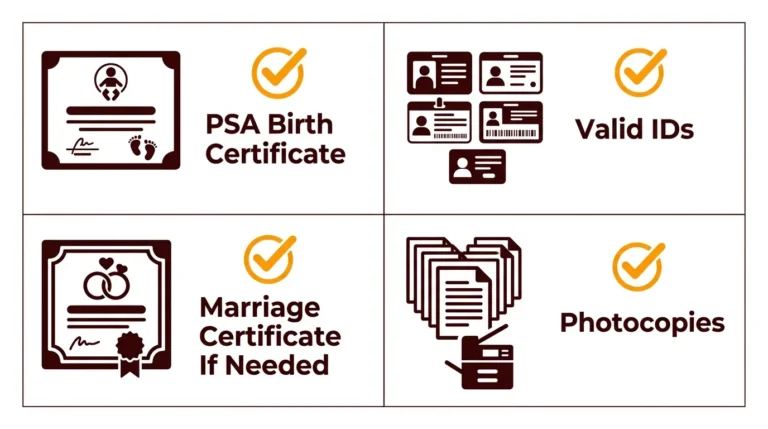
  • Original Passport: Must have at least six (6) months of validity remaining and show your latest entry stamp.
  • ACR I-Card (Alien Certificate of Registration): Issued by the Bureau of Immigration. If your ACR I-Card is still processing, present the official Bureau of Immigration receipt and Certificate of Pending Application.
  • Printed NBI Online Registration Form: Containing your appointment reference number and payment confirmation.
  • Secondary Government ID / Proof of Address: Lease contract, Philippine driver’s license, or barangay certificate (recommended backup).

Out-of-Country Application Requirements (Applying from Abroad)

If you have already left the Philippines and need a police certificate for an immigration petition, you cannot use the standard domestic walk-in system. You must prepare:

  • NBI Form No. 5 (Fingerprint Card Form): Available at the nearest Philippine Embassy or Consulate.
  • Rolled Fingerprint Impressions: Certified and stamped by the Philippine Consular Officer or local police authorities in your country of residence.
  • Photocopy of Passport Data Page: Showing biographical data and past Philippine visa/entry-exit stamps.
  • Two (2) 2×2 Recent Photos: On a plain white background without glasses.
  • Special Power of Attorney (SPA) or Authorization Letter: Required if an authorized representative in the Philippines will process and claim the certificate on your behalf.

Applying NBI Clearance for Foreigners Inside the Philippines

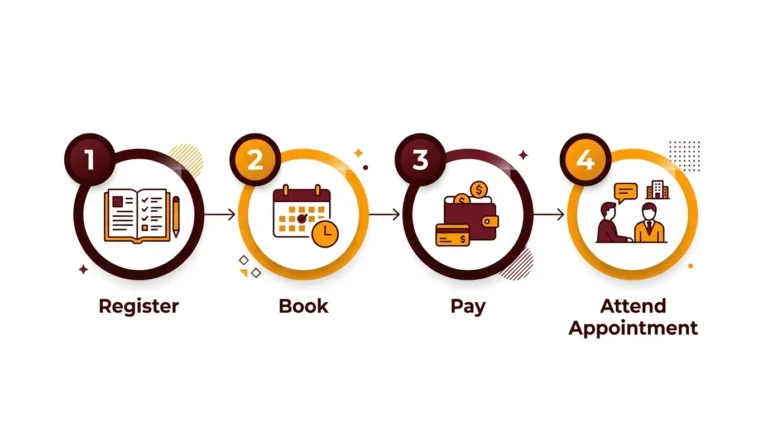
Foreign nationals currently residing in the Philippines must register through the official NBI Clearance Online Services Portal.

Create an Online Account

  • Visit the official portal: clearance.nbi.gov.ph.
  • Under the registration form, check “NO” for old clearance holders unless you previously held one.
  • Fill in your personal information exactly as it appears on your passport (First Name, Middle Name, Last Name, Gender, Date of Birth).
  • Set your nationality to your foreign citizenship and enter an active email address.
  • Verify your account via the SMS or email One-Time Password (OTP).

Fill Out the Applicant Profile

  • Log in to your newly created dashboard.
  • Complete all required fields:
  • Place of Birth: Enter city/country of birth.
  • Citizenship / Nationality: Match your passport.
  • Philippine Residential Address: Enter your local condominium, house, or hotel address.
  • Passport & ACR I-Card Numbers: Input accurate identification numbers.
  • Click Save Information.

Select Branch and Schedule Appointment

  • Click Apply for Clearance.
  • Under “Valid ID to Present,” select Passport or Alien Certificate of Registration (ACR).
  • Choose an NBI Clearance Center.
  • Select your preferred appointment date and time slot (AM or PM).

Important Recommendation: Foreign nationals are strongly advised to select the NBI Main Clearance Center (UN Avenue, Ermita, Manila) or major regional headquarters (e.g., Cebu or Davao), as smaller satellite mall kiosks frequently lack the backend database access to process non-citizen records directly.

Pay the Processing Fee

  • Choose your payment method:
  • E-Wallets: GCash, Maya.
  • Over-the-Counter: 7-Eleven (CLiQQ), Bayad Center, ECPay.
  • Online Banking: UnionBank, BDO, BPI.
  • Settle the standard base fee of ₱130.00 plus the payment gateway convenience fee (totaling around ₱160.00–₱180.00).
  • Save and print the NBI Reference Number and application confirmation slip.

Attend Your Biometrics Appointment

  • Arrive at the NBI center 15–30 minutes ahead of schedule.
  • Dress Code: Adhere to government dress standards (no sleeveless shirts, tank tops, shorts, or flip-flops).
  • Present your printed application slip, original passport, and ACR I-Card.
  • Complete the digital photo capture, electronic signature, and 10-finger biometric scan.
  • Collection: If your profile has no “HIT” (name match in the database), your official NBI Clearance certificate will be printed and handed to you on the same day.

Method 2: Applying from Abroad (For Former Philippine Residents)

If you currently reside outside the Philippines, you cannot complete digital biometrics online. You must submit physical fingerprint cards either via postal mail or through an authorized representative in Manila.

Overseas Application Workflow

  • Book an appointment at nearest Philippine Consulate
  • Complete rolled fingerprints on NBI Form No. 5
  • Pay consular authentication fees (~$25 – $45 USD)
  • Send packet to Manila via Courier or Representative
  • Mailed Clearance Section issues stamped certificate

Step 1: Secure Fingerprint Card at a Philippine Embassy/Consulate

  • Visit the nearest Philippine Embassy or Consulate General.
  • Request an NBI Clearance Application Form (NBI Form No. 5 / Blue Card).
  • Have your fingerprints impressed (rolled impression) by the consular officer or a certified local law enforcement agent.
  • Pay the consular certification/authentication fee (usually around $25.00 – $45.00 USD / €25.00, depending on local consular rates).

Step 2: Forward Documents to Manila

You can dispatch your completed documents through two primary channels:

Option A: Direct Postal Mail to the NBI Mailed Clearance Section

Enclose your authenticated Form No. 5, passport copy, photos, and a Philippine Peso / US Dollar bank draft payable to the Director, National Bureau of Investigation (or proof of online payment). Address the parcel to:

Option B: Via an Authorized Representative (Fastest)

  • Execute an Authorization Letter or Special Power of Attorney (SPA) authorizing a trusted friend, family member, or legal representative in Manila to act on your behalf.
  • Courier the authenticated fingerprint card, passport copies, photos, and SPA to your representative.
  • The representative registers an online appointment under the Mailed Clearance Section, pays the fee at a payment center, presents the documents at the NBI Main Office, claims the released clearance, and ships it back to you via international courier (DHL, FedEx, etc.).

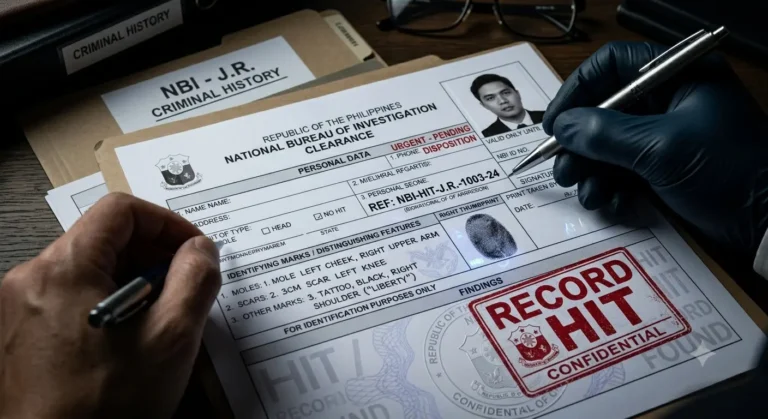
What Happens if You Get a “HIT”?

A “HIT” occurs when your full legal name matches or closely resembles a record within the NBI’s national criminal database.

Application Submitted ➔ Name Cross-Checked ➔ “HIT” Triggered ➔ Quality Review ➔ Final Release

Why Foreigners Get Hits:

  • Common Western, Hispanic, or Asian names (e.g., John Smith, David Lee, Maria Garcia) frequently share phonetic similarities with existing records.
  • Prior administrative cases, labor disputes, or past immigration hold-departure inquiries logged with the Bureau of Immigration.

How to Handle an NBI HIT:

  • Quality Control Verification: The NBI will request that you wait for a manual review (typically 5 to 10 working days).
  • Quality Control Interview: In rare cases of duplicate records, you may be asked to attend a brief verification interview and execute an Affidavit of Denial confirming you are not the individual named in the derogatory record.
  • Release: Once cleared by the legal division, your clearance will be stamped and released without further complication.

DFA Apostille for Overseas Use

If you need your Philippine NBI clearance for immigration authorities abroad (e.g., USCIS in the United States, IRCC in Canada, or Home Affairs in Australia), the clearance certificate must often be Apostillized by the Philippine Department of Foreign Affairs (DFA).

  • Validity: Standard NBI Clearances are valid for one (1) year from the date of issue.
  • Apostille Procedure: Once your clearance certificate is released with an official embossed dry seal, book an appointment through the DFA Apostille Portal (co.dfaapostille.ph).
  • Authentication: The DFA attaches an Apostille certificate recognized by all member countries of the Hague Apostille Convention, confirming the authenticity of the NBI signature and seal.

FAQs

Yes. Foreign tourists on a standard 9(a) visa can apply for an NBI clearance as long as they hold a valid foreign passport with an unexpired entry visa stamp. However, the NBI Main Office in Manila is the most reliable branch for processing tourist clearances.

If you have lived in the Philippines for more than 59 days, you are legally required to hold an ACR I-Card issued by the Bureau of Immigration. The NBI will ask for this card. If you have been in the country for less than 59 days, your valid passport with your initial tourist entry stamp serves as your primary identification.

For in-person applications in the Philippines, the cost is the standard ₱130.00 – ₱180.00 fee. For applicants processing through an embassy abroad, budget for the consular fingerprint authentication fee ($25.00 – $45.00 USD) plus courier shipping costs.

If you were previously issued an NBI clearance with your biometrics registered on the newer biometric database, you may attempt an online renewal. However, if your visa classification, passport number, or ACR I-Card details have changed, you must schedule a standard appointment to update your personal data file.

Conclusion

Foreign nationals can secure an NBI clearance by using the correct documentation channels and branch locations. Booking an appointment through clearance.nbi.gov.ph, selecting the NBI Main Clearance Center in Manila, and carrying your valid passport and ACR I-Card will ensure your criminal record check is processed without delay.
Similar Posts

Leave a Reply

Your email address will not be published. Required fields are marked *