NBI Hit Reasons and How to Resolve Them
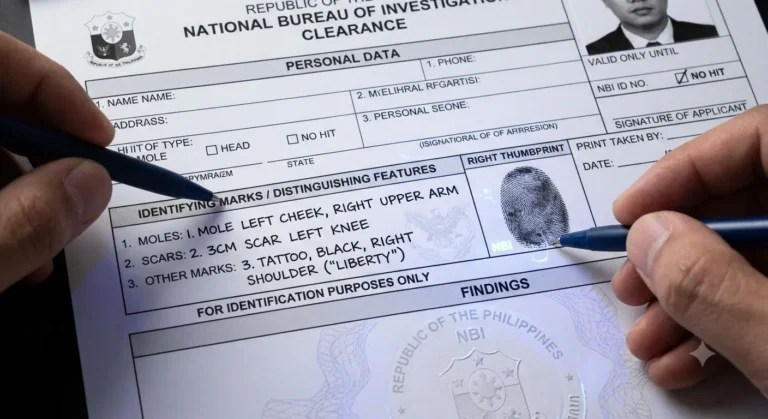
If you were told “may HIT ka sa NBI,” it usually means the NBI system found a name match in its database and needs extra verification before releasing your clearance. In most cases, an NBI hit does not automatically mean you have a criminal record; it often happens because of a namesake or similar personal details.
What Is an NBI Hit?
An NBI hit is a flag in the NBI clearance database that appears when your name, or a very similar name, matches an existing record. The system pauses the release so that NBI personnel can manually verify whether the record belongs to you or to another person with the same or similar identity.
Identity-Check Safeguard: This is a security and identity-check measure, not an automatic accusation. It exists to prevent the wrong clearance history from being assigned or issued to the wrong person.
Why Does an NBI Hit Happen?
An NBI hit trigger is calculated based on database algorithms matching personal metrics. Applications are held for several standard reasons:
In many situations, the “hit” is simply a namesake issue and nothing more. However, the NBI verification team still requires sufficient time to review the underlying records thoroughly before authorizing the safe release of your clearance document.
Does an NBI Hit Mean You Have a Criminal Case?
No, absolutely not always. A hit can frequently trigger even if you have no criminal history whatsoever, especially if your name shares structural traits with another identity in the database.
That said, the NBI will not release your hardcopy clearance immediately until identity validation is complete. If the verification system connects your physical fingerprints or biometric details to a real, unresolved legal matter, you may be requested to present additional records or official court clearances to clarify the case status.
How Long Does an NBI Hit Take to Resolve?
The manual vetting process involves careful record separation by background investigators.
Standard Vetting Period: Most NBI hit cases involve an internal waiting period of roughly 5 to 10 working days for complete verification. During this time, NBI staff manually audit data points like birthdates, birthplaces, and parental names against the flagged record.
Applicants cannot expedite this internal manual verification routine. The best course of action is to return to the office exactly on the pickup date stamped on your physical claim stub or strictly follow the individual instructions provided by your branch personnel.
What to Do If You Get an NBI Hit
If your application is marked with a hit status flag, stay completely calm and systematically follow the branch instructions. Most of the time, you will simply be told to return after the verification window so your cleared record can be printed.
Representative Claim Rule: If an authorized third party is claiming the clearance document on your behalf, they must explicitly present a formal authorization letter signed by you, alongside the required IDs and supporting record profiles.
Documents That May Help Resolve an NBI Hit
The exact documentation path depends entirely on why the matching flag triggered. Preparing these identity metrics in advance helps verification officers clear namesake exceptions faster
Primary Government ID
(UMID, Driver’s License, PRC)
PSA Birth Certificate
(For maternal/paternal lineage verification)
Valid Philippine Passport
(Primary identity document confirmation)
Court Clearance
(Proof that a previous case has been resolved, if applicable)
Notarized Affidavit
(Supporting record if resolving a severe namesake issue)
Note: If the underlying record belongs to another individual who happens to share your name string, these verification papers give the NBI investigators the data points they need to verify your identity and release your document without complications.
How to Reduce the Chance of an NBI Hit
While you cannot entirely eliminate the systemic risk of matching a namesake data array, you can significantly lower the probability of administrative processing delays by ensuring your profile form inputs are completely accurate and comprehensive. Small typing mistakes frequently trigger manual identity flags.
Exact Legal Name
Use your full legal name parameters exactly as they appear on your physical, primary government identification cards.
Append Legal Suffixes
Always explicitly include standard family name extensions like Jr., Sr., II, or III if they form part of your legitimate legal record.
Verify Secondary Fields
Double-check that birthdates, structural birthplaces, and parent designations precisely reflect your PSA registration documents.
Prevent Profile Duplication
Avoid managing multiple active or conflicting online accounts, as repeating credentials triggers security cross-matching.
NBI Hit for First-Time Applicants
First-time applicants are naturally more likely to experience anxiety when hearing the term “hit,” but the resolving mechanism remains standard: identity verification followed by eventual release on your instructed pickup date. The NBI utilizes the search matching system purely as a shield against mistaken identity fraud, never as a tool to punish normal portal users.
If you are registering for the very first time and your information fields are accurate, you will simply need to wait out the baseline verification processing period. If a genuine record discrepancy is identified, an official will explicitly specify what paperwork is needed to unlock your file.
NBI Hit vs “No Hit” Matrix
Understanding the processing outputs helps remove anxiety from the clearance verification workflow:
System Output Status | Meaning & System Action | Typical Release Timeline |
|---|---|---|
No Hit | The core indexing system found no matching database records containing your personal identifiers or namesakes. | Immediate Release |
Hit | The filtering database flagged an identical or highly similar entry that requires physical inspection by background agents. | Delayed Release |
The functional difference between these two states centers strictly around manual administrative review time, not around individual guilt or innocence. Applicants should not panic when receiving a stamped claim stub.
FAQs
Final Thoughts
An NBI hit is a delay, not a disaster. It usually means the NBI needs extra time to confirm your identity because your name matched a record in its database.
If you understand the process, bring the right documents, and follow the branch instructions, you can resolve the issue without unnecessary stress. For most applicants, the clearance is eventually released after verification.