NBI Clearance Abroad: How Filipinos Apply, Pay & Receive It in 2026
NBI clearance abroad is the National Bureau of Investigation clearance certificate that a Filipino living outside the Philippines requests through the NBI Mailed Clearance Section instead of walking into a branch. It is for OFWs, migrants and students overseas who need the certificate for a visa, immigration file, job or licence. You cannot finish the whole thing online from another country, so this page shows the parts you do abroad, the parts done in Manila, and what it costs.
Note: This website is independent and not affiliated with the NBI. Always confirm current rules on the official portal, clearance.nbi.gov.ph, or by emailing the NBI Mailed Clearance Section.
Who Needs an NBI Clearance From Abroad and What You Need First?
You need this route if you are a Filipino citizen, you are outside the Philippines, and an employer, embassy or immigration office wants proof of your police record from home. Non-Filipinos who lived in the Philippines follow a different process, covered on our NBI clearance for foreigners page.
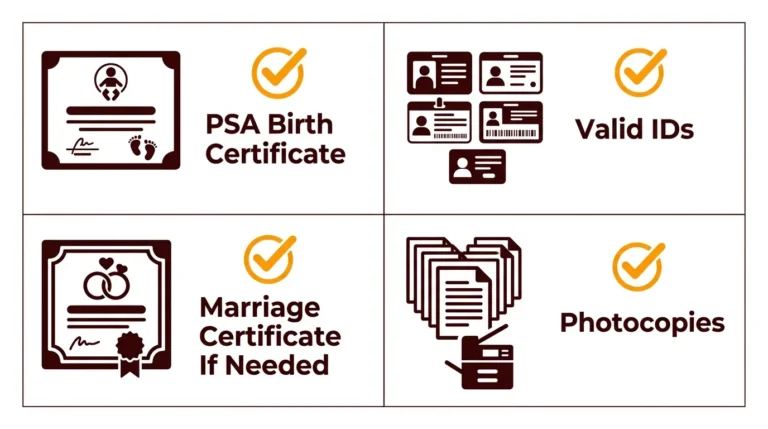
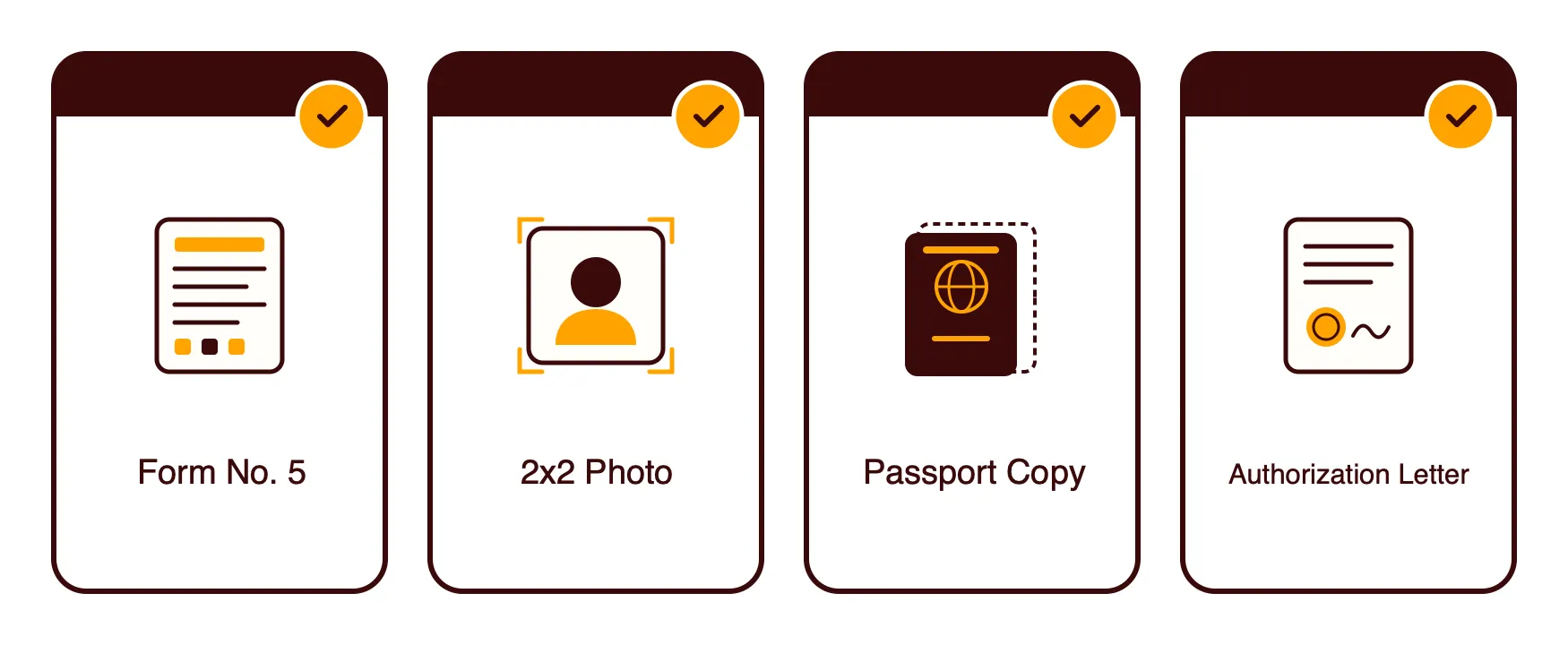
Before you start, gather:
Married women should write their name in the format the form asks for, including the maiden middle name.
Why this matters: Processing and release happen only in the Philippines. The embassy takes your fingerprints. It does not issue the clearance.
How Do You Get NBI Clearance Abroad Step by Step?
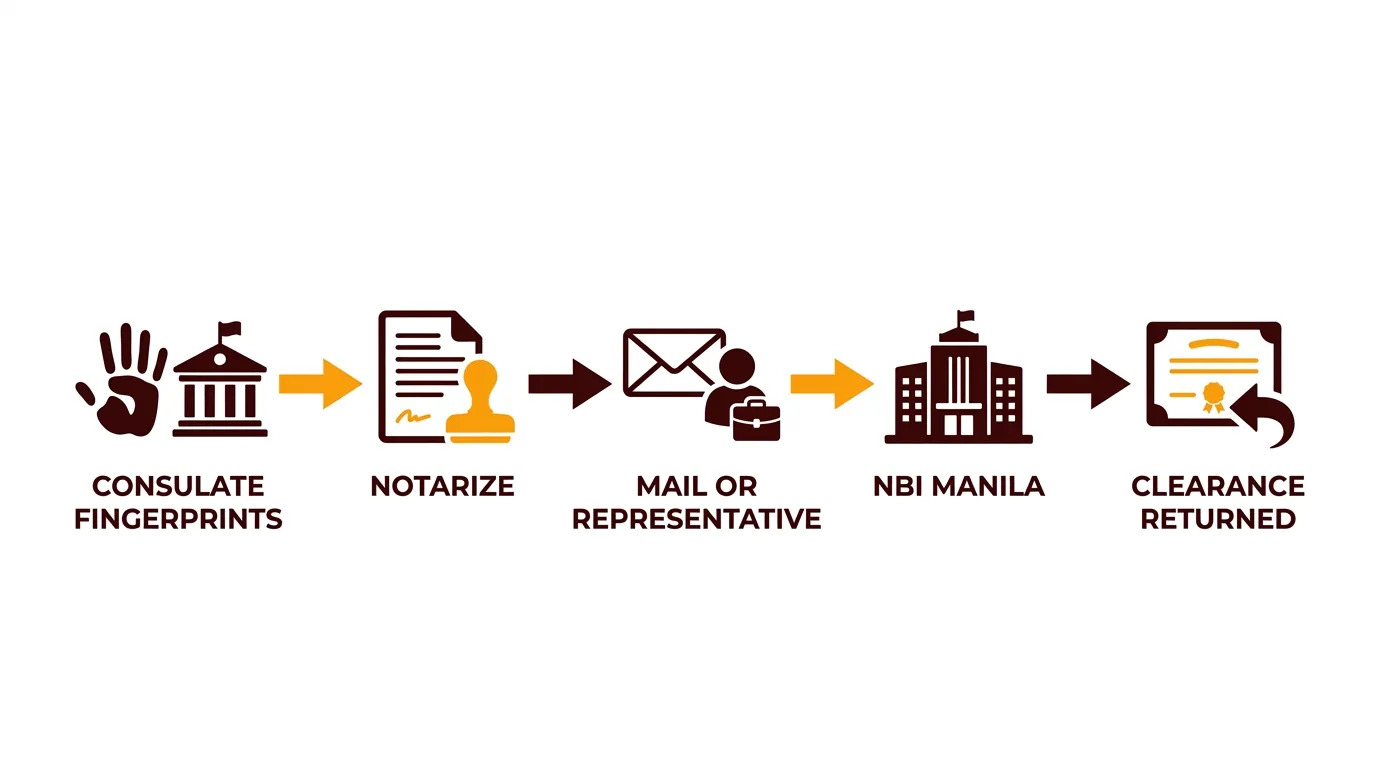
There are two routes. You can mail your documents straight to the NBI, or you can send them to a person in the Philippines who submits and collects everything for you.
Step 1: Get and Fill Out Form No. 5
Ask your nearest Philippine Embassy or Consulate for the form and fill it in with black ink. Some posts let you download a sample to copy. If you live far from a post, some embassies say honorary consulates may help, so ask before you travel.
Step 2: Have Your Fingerprints Taken
Consular staff roll your fingerprints on the form, then sign it, write their designation and stamp it with the office seal on the lower back. If there is no post nearby, the NBI accepts prints taken at the nearest police station, but the officer must still sign and add a seal.
Some posts, such as the Philippine Embassy in Madrid, take walk-ins on a first come, first served basis. Others, such as the Consulate General in New York, require an online appointment. Check your own post’s page first.
Tip: Practice a clean, dry, unsmudged rolling. Smudged prints are the classic reason for a rejected form.
Step 3: Get the Form Authenticated
Most consulates notarize or authenticate the completed card so it is legal for use in the Philippines. The Los Angeles and New York consulates both list a US$25 notarial fee, and New York also lists a US$5 convenience fee. Your post may charge something different, so confirm locally.
Step 4: Choose How to Submit
Option A: Mail It to the NBI
Send your form, photo, passport copy and payment to:
The NBI’s mailed-clearance page (nbi.gov.ph, checked September 2026) lists PHP 200 in total: PHP 130 for the clearance and PHP 70 for return mailing, payable in Philippine pesos or the US dollar equivalent. It does not name a payment instrument for mailed applications. Some consulates and third-party guides say money order or bank draft, so ask your post which one it recommends.
Option B: Use a Representative in the Philippines
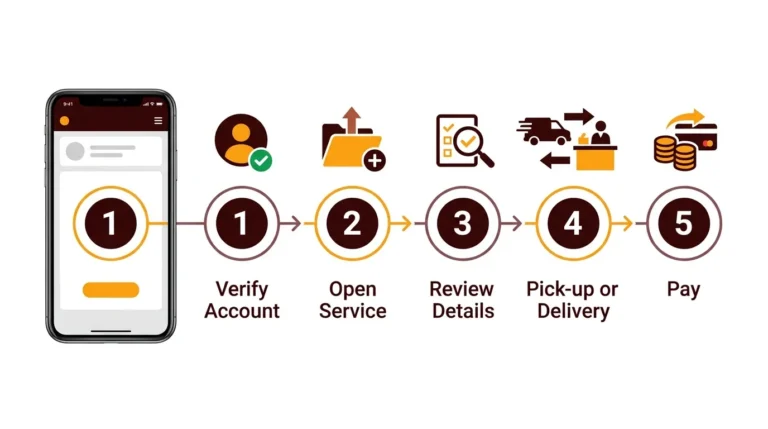
Your representative registers online at clearance.nbi.gov.ph using your details, picks the NBI Main Clearance Center as the site, pays and gets a reference number. Then they submit your documents at the Mailed Clearance Section. You will need to send them your form and a signed authorization letter (see below).
Read our NBI registration walkthrough if they have never created a portal account.
Step 5: Receive Your Certificate
The NBI mails the certificate to you, or your representative collects it and forwards it. Check that it carries the embossed NBI dry seal, then sign or affix your right thumbmark where indicated.
Warning: Do not remove the dry seal or laminate the certificate before the receiving office has checked it.
How Much Does NBI Clearance Abroad Cost?
Costs add up from three places: the NBI, your consulate, and shipping.
Cost item | Amount | Source status |
|---|---|---|
NBI clearance fee (mailed application) | PHP 130 | NBI mailed-clearance page |
Return mailing charge | PHP 70 | NBI mailed-clearance page |
Consulate notarization of fingerprint card | US$25 (LA and NY) | Consulate pages, varies by post |
Consulate convenience fee | US$5 (New York) | Consulate page, varies by post |
Courier to Manila | Set by your carrier | Your choice |
For comparison, the domestic online fee is currently shown as PHP 130 plus a small e-payment charge on our NBI clearance price page. That is separate from the mailed route above.
If your representative pays online, GCash, 7-Eleven CLiQQ and Bayad Center are the usual channels. See pay NBI using GCash for the steps.
Should a Representative Pick It Up? Authorization Letter Explained
A representative is the fastest option if you have someone reliable in Manila. Consulate pages describe next-working-day release for some cases, though that is a consulate estimate, not an NBI guarantee.
Prepare:
- A signed authorization letter naming your representative.
- A notarized authorization or Special Power of Attorney if your consulate or the NBI asks for one (Madrid lists it).
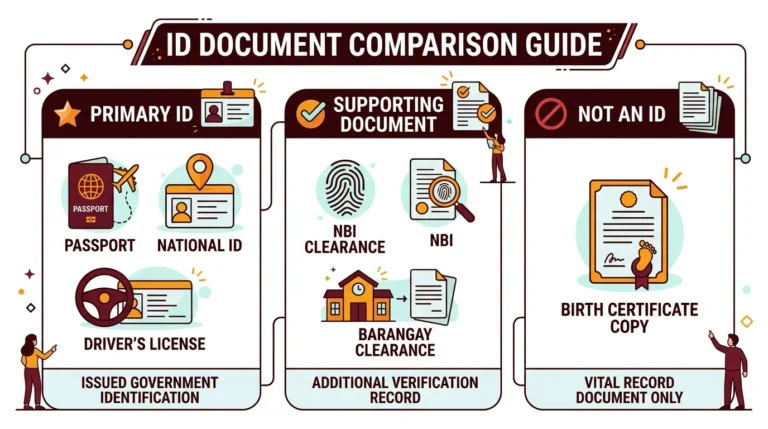
- The representative’s valid ID. See valid IDs for NBI clearance.
- Your original fingerprint card, photo, passport copy and old clearance if renewing.
Your letter should state your full name, date of birth, the purpose, the representative’s full name, and that they may submit and receive the clearance for you.
Choose a person with flexible hours, because queues at the main center can be long.
How Long Does It Take?
The NBI says it processes mailed applications in a maximum of five working days after it receives your documents. The catch is transit time. Registered mail from abroad can take weeks, and one consulate source notes local post can take up to two months.
If your name matches someone in the NBI database, you get a “hit” and the release is delayed. Our NBI hit page explains how long that can take.
Route | Who does the work | Typical speed | Best for |
|---|---|---|---|
Mail directly to NBI | You | Slowest, depends on postal transit | No contacts in the Philippines |
Representative submits | Relative or friend | Faster once documents arrive | Urgent requests |
Travel and apply in person | You | Same visit if no hit | You are already visiting home |
So, using a representative is the best method because you avoid postal delays on the return leg and can follow up in person.
Do You Need an Apostille for NBI Clearance Abroad?
Sometimes. Many foreign agencies want an NBI clearance apostilled by the Department of Foreign Affairs (DFA). The Philippines has been in the Apostille Convention since May 15, 2019, so the DFA apostille replaces embassy legalization for member countries.
Warning: Do not pay anyone before checking the current fee and schedule with the DFA. Published fees vary across websites.
Tips for Applying From Overseas
Start early. Add several weeks for post both ways, especially if you mail directly.
Book your fingerprint appointment first. Some consulates require one, and slots can fill quickly.
Use a courier with tracking. Never send originals by plain post if you can help it.
Scan everything before sending. If something goes missing, you can start again without redoing the whole application.
Match your name exactly. Use the same spelling, order and middle name as your passport.
Include a return address you can read. A clear abroad address avoids lost mail.
Ask your representative to confirm receipt. Have them email you a photo of the receipt and reference number.
Check the clearance’s age. Many agencies want a certificate less than six months old. See NBI clearance validity.
Renewing? Bring the old certificate. Only certificates from 2014 onward qualify for renewal; older ones are treated as new applications.
Email the source. The Mailed Clearance Section can be reached at mailedclearance@nbi.gov.ph.
Frequently Asked Questions
Final Thoughts
Applying from overseas takes patience, but it is not hard. Get the form, get clean fingerprints, authenticate them, then decide who submits. If you have a trusted person in the Philippines, use a representative, because it removes most of the postal delay.
Before you commit, email the Mailed Clearance Section, confirm the current fee and payment method, and ask your consulate what it charges. Rules change, and a two-minute email can save a rejected application.